PyTorch 101 - Part 1
Basics of pytorch
PyTorch 101 - Part 1
Overview
Why PyTorch?
- N-dimensional Tensor computation on GPUs
- Automatic differentiation for training deep neural networks
Training & Testing
Tools
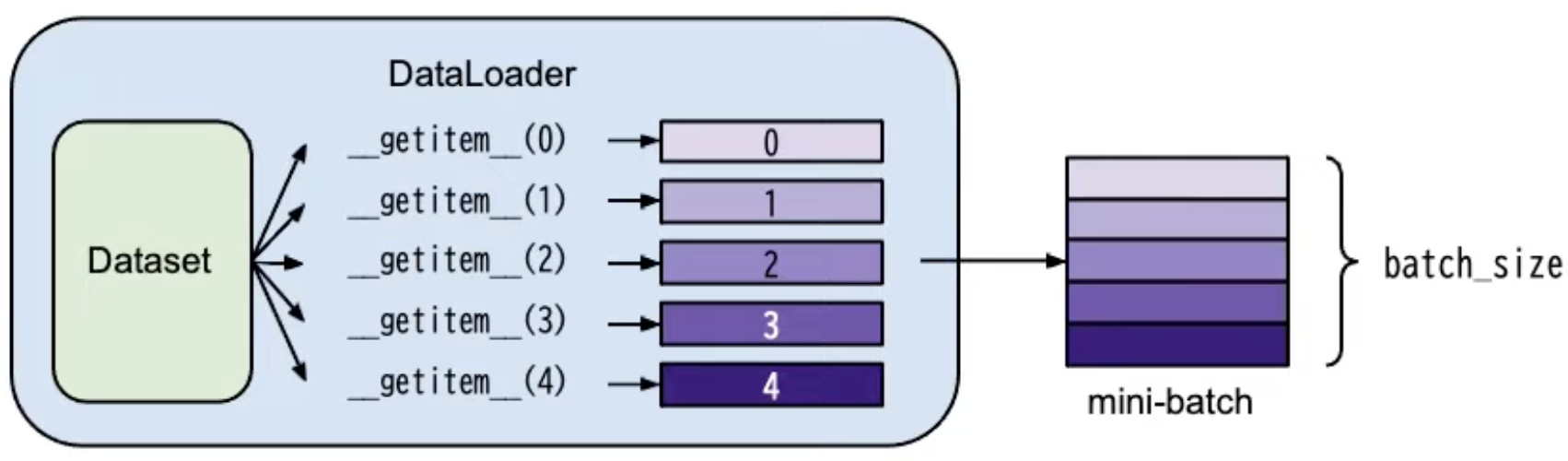
- torch.utils.data.Dataset: stores data samples and expected values
- torch.utils.data.DataLoader: groups data in batches
Usage
- dataset = MyDataset(file)
- dataloader = DataLoader(dataset, batch_size, suffle=True) // training: shuffle=True; Testing: suffle=False£¢¢4
MyDataset:
1
2
3
4
5
6
7
  class MyDataset(dataset):
      def __init__(self, file):
          self.data = ...
      def __getitem__(self, index):
          return self.data[index]
      def __len__(self):
          return len(self.data)
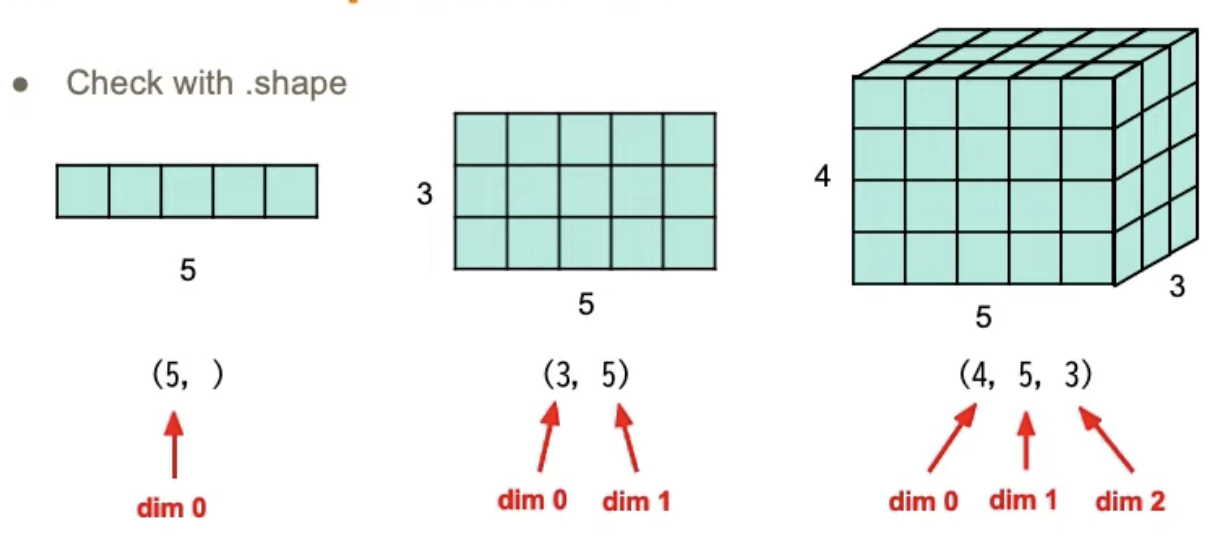
Tensor
high-dimensional matrices(or arrays)
Shape
Creation
- directly from data:
1
2
      x = torch.tensor([[1,-1],[-1,1]])
      x = torch.from_numpy(np.array())
- tensor of constant zeros/ones
1
2
      x = torch.zeros([2,2]) # shapes, will create "tensor([[0., 0.], [0., 0.]])"
      x = torch.ones([1,2,5]) # likewise
Operation
- Addition
1
      z = x + y
- Subtraction
1
      z = x - y
- Power
1
      y = x.pow(2)
- Summation
1
      y = x.sum()
- Mean
1
      y = x.mean()
- Transpose: transpose 2 specific dimensions
1
      x = x.transpose(0,1) # select two dimensions and switch
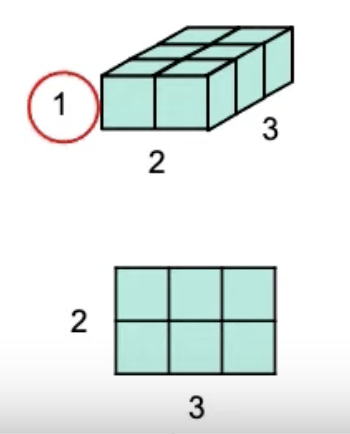
- Squeeze: remove the specified dimension with length = 1
1
2
3
      x = torch.zeros([1,2,3])
      x = x.squeeze(0)
      x.shape # will be torch.Size([2,3])
- Unsqueeze: expand a new dimension
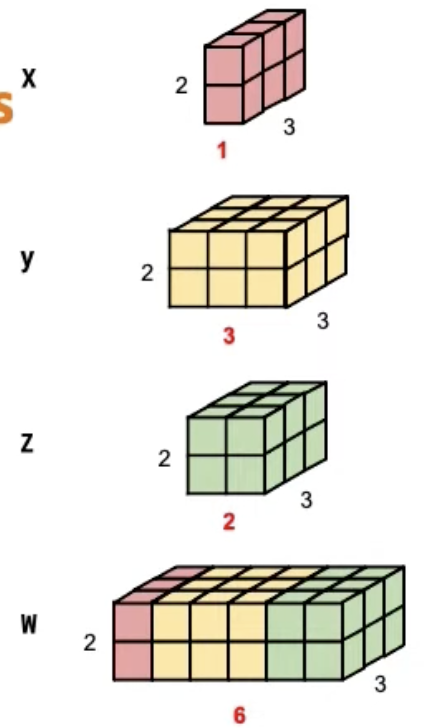
- Cat: concatenate multiple tensors
1
2
3
4
5
6
7
``` python
    x = torch.zeros([2, 1, 3])
    y = torch.zeros([2, 3, 3])
    z = torch.zeros([2, 2, 3])
    w = torch.cat([x,y,z], dim=1)
    w.shape() # will be torch.Size([2,6,3])
```
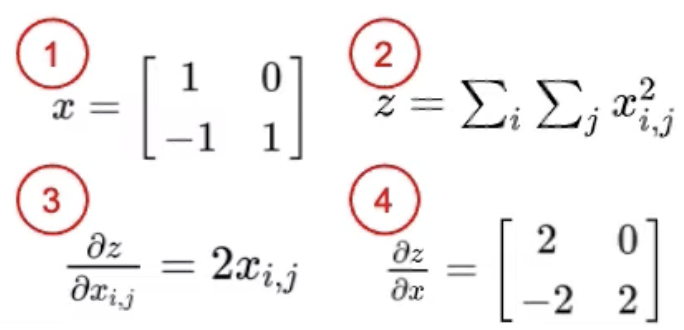
Gradient Calc
1
2
3
4
    x = torch.tensor([[1.,0.],[-1.,1]], requires_grad=True)
    z = x.pow(2).sum()
    z.backward()
    x.grad # tensor([[2.,0.][-2.,2.])
Neural Network
torch.nn - network layers
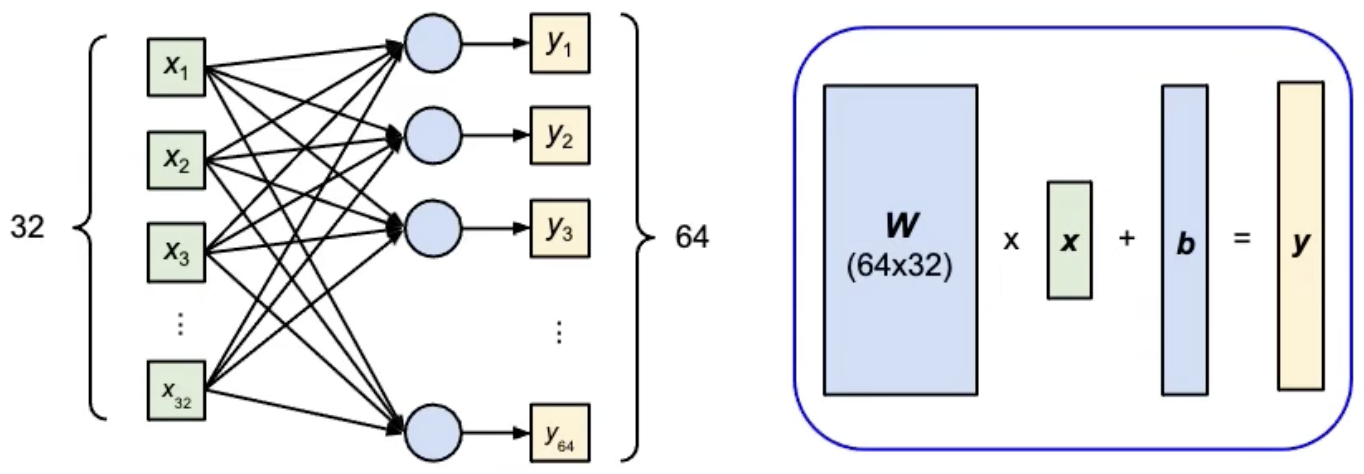
Example - Linear Layer
1
2
3
4
    # nn.Linear(in_features, out_features)
    layer = torch.nn.Linear(32,64)
    layer.weight.shape # torch.Size([64,32])
    layer.bias.shape # torch.Size([64])
Build a NN
1
2
3
4
5
6
7
8
9
10
11
class MyModel(nn.Module):
    def __init__(self):
        super(MyModel, self).__init__()
        self.net = nn.Sequential(
            nn.Linear(10,32),
            nn.Sigmoid(), # nn.ReLu()
            nn.Linear(32,1)
        )

    def forward(self,x):
        return self.net(x)
Loss Function
- Mean Squared Error(for regression tasks)
1
      criterion = nn.MSELoss()
- Cross Entropy(for classification tasks)
1
      criterion = nn.CrossEntropyLoss()
- loss = criterion(model_output, expected_value)
Optimizer
Gradient-based optimization algorithms that adjust network parameters to reduce error.
Implementation
- Call
optimizer.zero_grad()to reset gradients of model parameters - Call
loss.backward()to backpropagate gradients of prediction loss - Call
optimizer.step()to adjust model parameters
Neural Network Training Steps
a simple training procedure of a neural network using torch
Setting up
1
2
3
4
5
    dataset = MyDataSet(file)   # read data via MyDataSet as defined above
    training_set = DataLoader(dataset, 16, shuffle=True)    # put dataset into DataLoader
    model = MyModel().to(device)     # construct model and move to device(cpu/cuda)
    criterion = nn.MSELoss()    # set loss function
    optimizer = torch.optim.SGD(model.parameters(), 0.1)    # set optimizer
Training Loops
1
2
3
4
5
6
7
8
9
    for epoch in range(n_epochs):
        model.train()   # set model to training mode
        for x,y in training_set:    # iterate through the DataLoader
            optimizer.zero_grad()
            x, y = x.to(device), y.to(device)
            pred = model(x)     # forward pass(compute output)
            loss = criterion(pred, y)
            loss.backward()
            optimizer.step()    # update model with optimizer
Validation Loops
1
2
3
4
5
6
7
8
9
    model.eval()    # set model to evaluation mode
    total_loss = 0
    for x,y in dv_set:
        x, y = x.to(device), y.to(device)
        with torch.no_grad():   # disable gradient calculation
            pred = model(x)     # forward pass
            loss = criterion(pred, y)
        total_loss += loss.cpu().item() * len(x)
        avg_loss = total_loss / len(dv_set.dataset)
Testing Loops
1
2
3
4
5
6
7
    model.eval()
    preds = []
    for x in tt_set:
        x = x.to(device)
        with torch.no_grad():
            pred = model(x)
            preds.append(ptrd.cpu())    # collect prediction
why
model.eval(): changes behaviour of some model layers, such as dropout and batch normalization
why
with torch.no_grad(): prevents calcilations from being added into gradient computation graph, usually used to prevent accidental training on validation/testing data
S/L Trained model
1
2
3
4
5
    # saving
    torch.save(model.state_dict(), path)
    # loading
    ckpt = torch.load(path)
    model.load_state_dict(ckpt)
This post is licensed under CC BY 4.0 by the author.